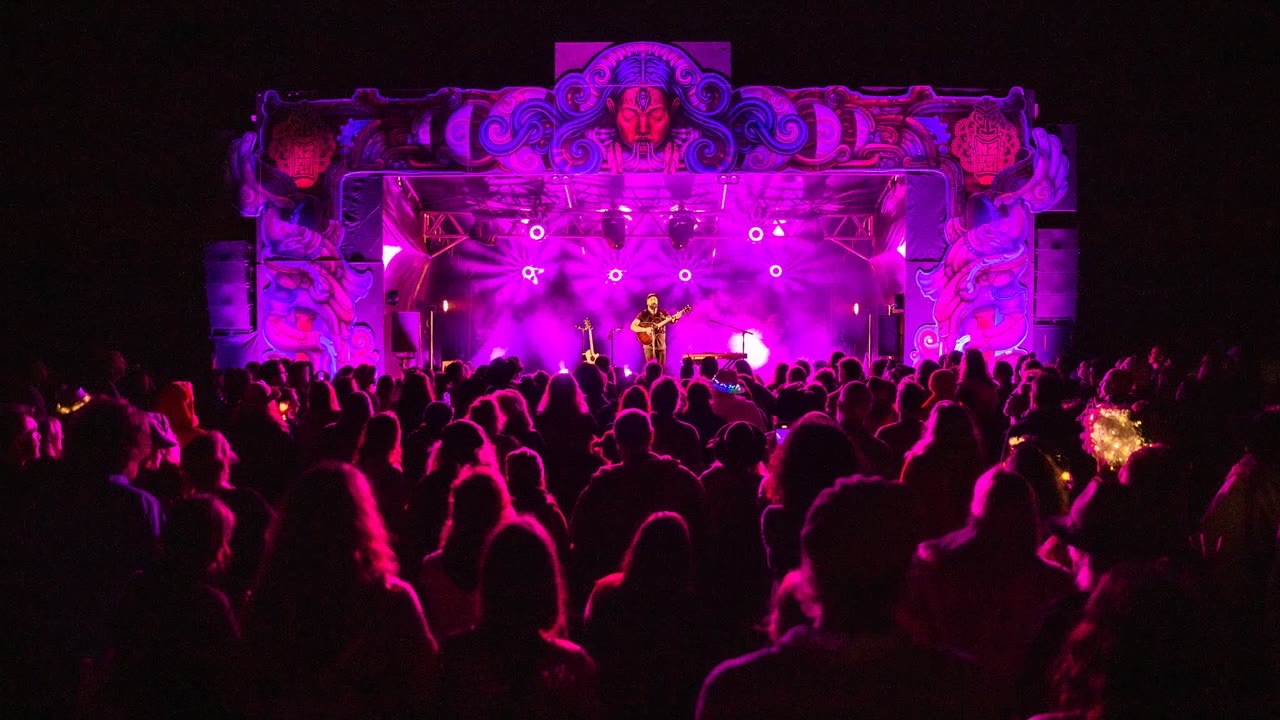
NZ Spirit Festival
Stage Facade Integration
Location
New Zealand
NZ Spirit Festival needed a stage that read as one piece: a custom facade wrapped around the structure, with lighting and projection mapping working to the same picture rather than fighting each other. Electric Boogie took on the festival staging and projection mapping as a single technical job, from the ground support up.
We are equal parts artists and technicians, and a stage facade only works when the crew building the structure also understands the show landing on it. The same crew that planned the rig ran it on site, so the staging, lighting and mapping were drawn to one plot and held together through load-in.
Challenge
A festival stage facade is not a backdrop hung in front of a rig. The facade has to be carried by structure rated for it, the lighting has to sit within the same geometry, and the projection mapping has to register to physical surfaces that are out in the weather and built to a deadline. Get any one of those out of step and the live environment stops reading as a whole. NZ Spirit Festival wanted the facade, the light and the mapped content to feel like one designed surface, which meant the engineering and the creative had to be planned together from the start, not bolted on at the end.
Engineering response
We ran ground support and staging to carry a custom stage facade, then built the show into that structure rather than around it. Specialised lighting and projection mapping were registered to the facade so the surfaces, the light and the mapped content moved as one. With the crew who designed the rig also running it on site, the facade integration and the mapping were held to the same plot through load-in, line-up and the live programme, and the structure stayed the reference point for where every fixture and every projected pixel landed.
Outcome
NZ Spirit Festival got a custom stage facade that read as one engineered surface: ground support and staging carrying the structure, with lighting and projection mapping registered to it and synchronised across the show. The facade, the light and the mapped content worked together rather than as separate layers, designed and run by one crew.